Home Learning
Home learning is set weekly for all children. This is mainly provided through a range of online platforms used across different year groups. Children should also continue with their reading and spelling at home.
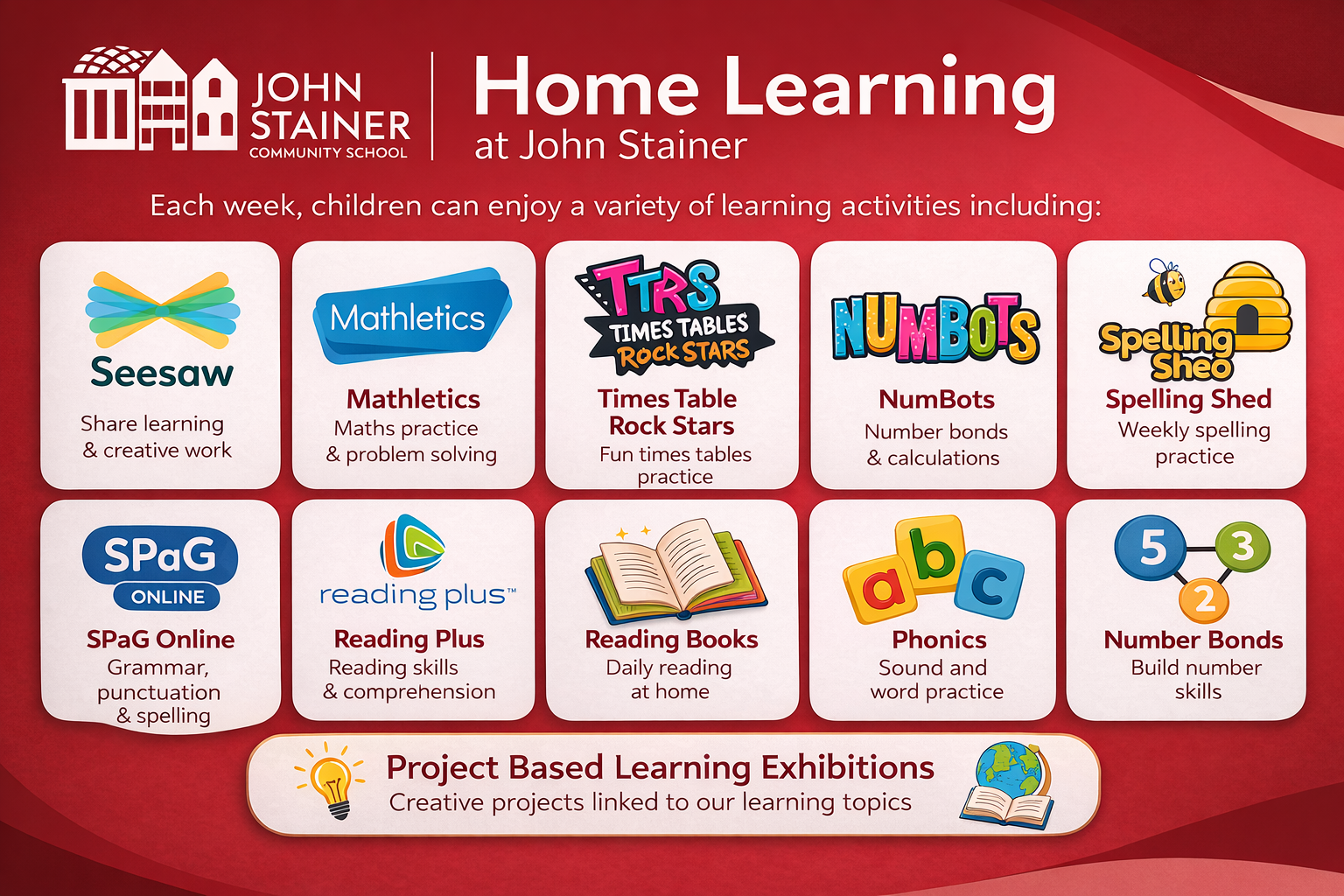
Login details will be provided by the class teacher
The exact details and expectations for home learning will be shared with each class at the beginning of every term.
Tasks are set at a level children should be able to attempt independently, with parents overseeing and supporting their learning where needed. Instructions are kept clear so that children and parents understand what is required.
Teachers will make clear when work should be handed in, usually on a Wednesday, so that it can be reviewed before the next task is set.
Children should bring their book bag to school every day. This helps keep home learning books tidy, protects reading books and allows staff to keep track of completed work.
Where home learning is consistently not completed, the teacher will speak with the pupil. If this continues, a meeting with parents or carers may be arranged to agree how best to support the child.
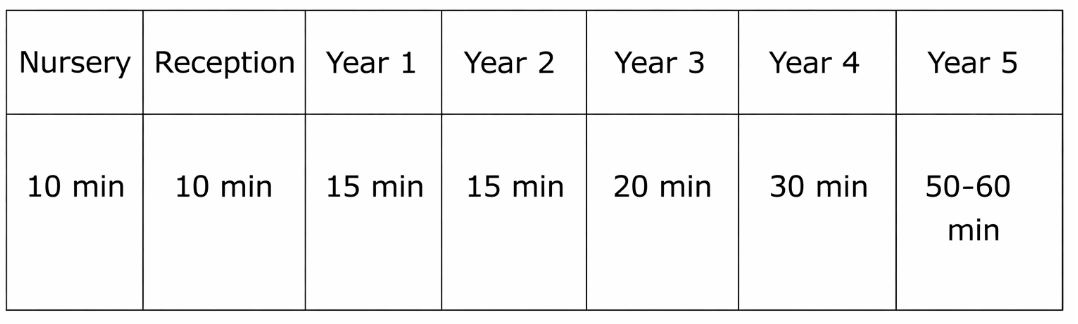
Estimated time for home learning
Including reading and spelling practice, home learning should take no longer than the following time:
Holiday home learning
Home learning is not usually set during half terms or school holidays unless there is a specific reason. These periods provide opportunities for families to explore and learn together by visiting museums, galleries, parks and exhibitions.
Communication with school
All children receive a home school communication card each term. Parents can use this to send messages to the class teacher. Cards should be handed in at the start of the day and will be returned at the end of the day.
Reading
Children are encouraged to read every day with an adult or older sibling who can support and discuss the book with them.
Reading books are changed twice weekly in EYFS and Key Stage 1. Once children begin reading chapter books, they can change their books as needed. If children in Key Stage 2 are not yet reading chapter books, staff will support them to change books during the week.
Digital awareness
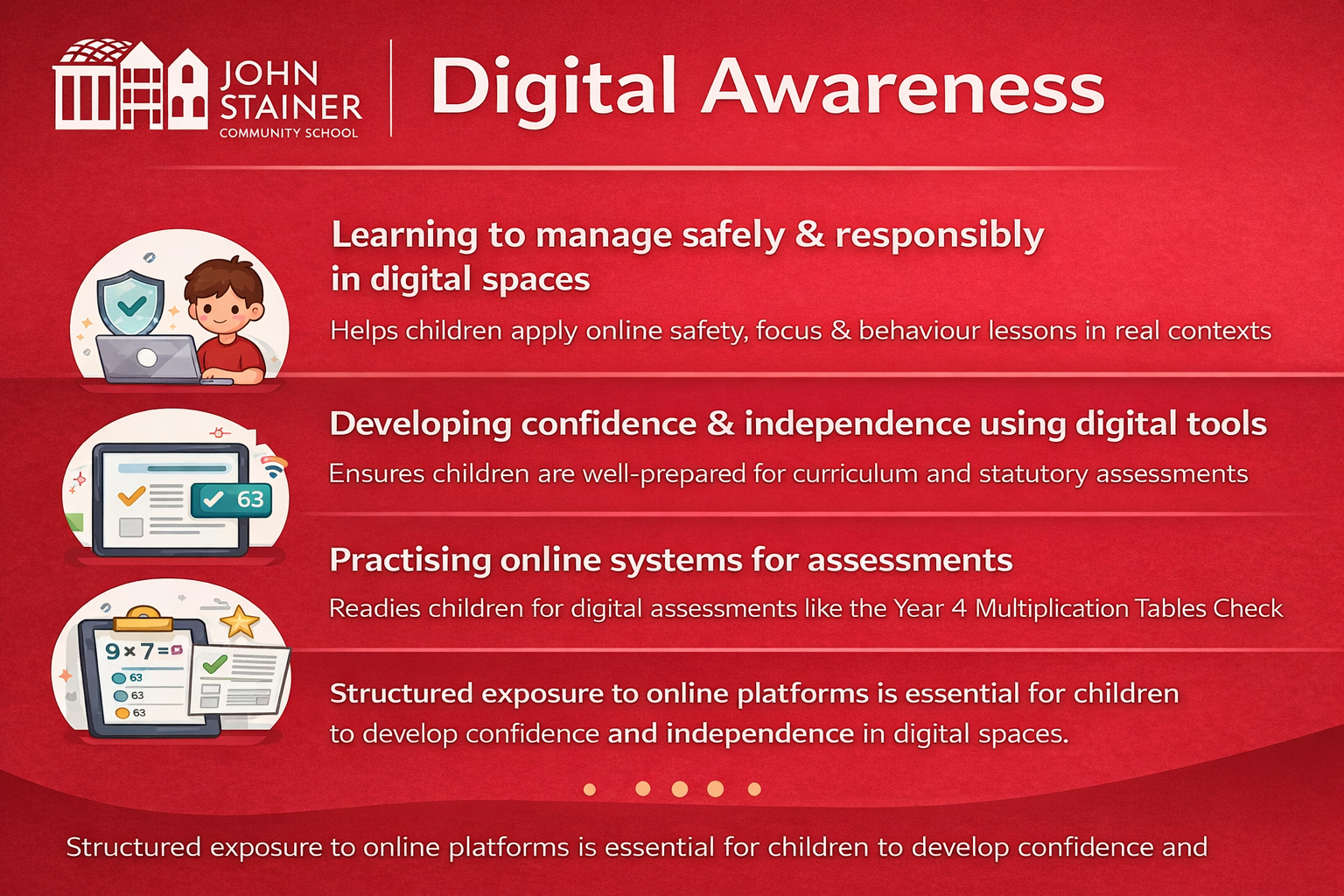 Digital awareness forms an important part of children’s development. They need structured exposure to online platforms so they learn to manage themselves safely, responsibly and appropriately in digital spaces. This enables them to apply what they are taught in school about online safety, focus and behaviour in real contexts.
Removing access to online learning places children at a disadvantage compared to their peers and limits opportunities to build confidence and independence in using digital tools that form part of both the curriculum and statutory assessment.
In some year groups, national statutory assessments take place online. For example, Year 4 pupils complete the Multiplication Tables Check digitally. Children need regular opportunities to practise navigating online systems so that they build confidence ahead of these assessments.

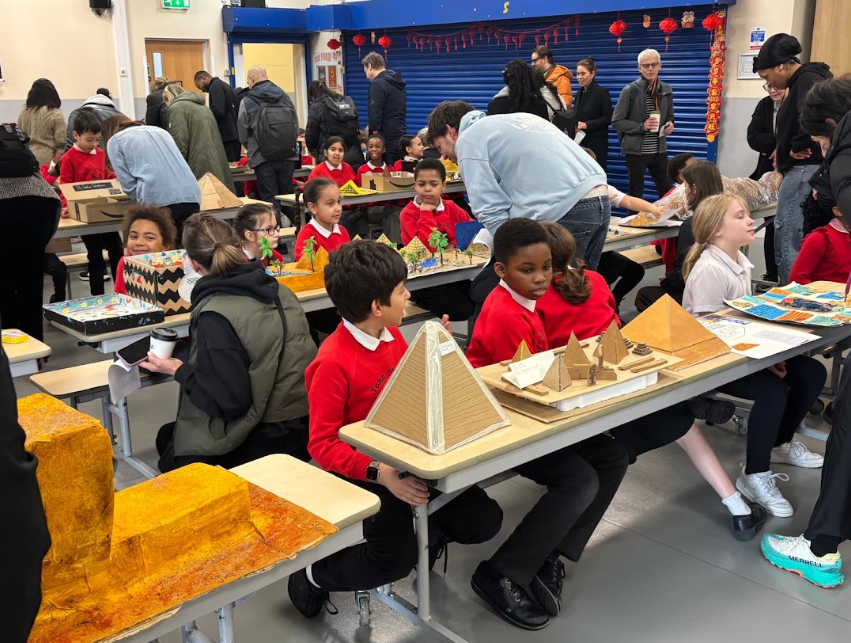
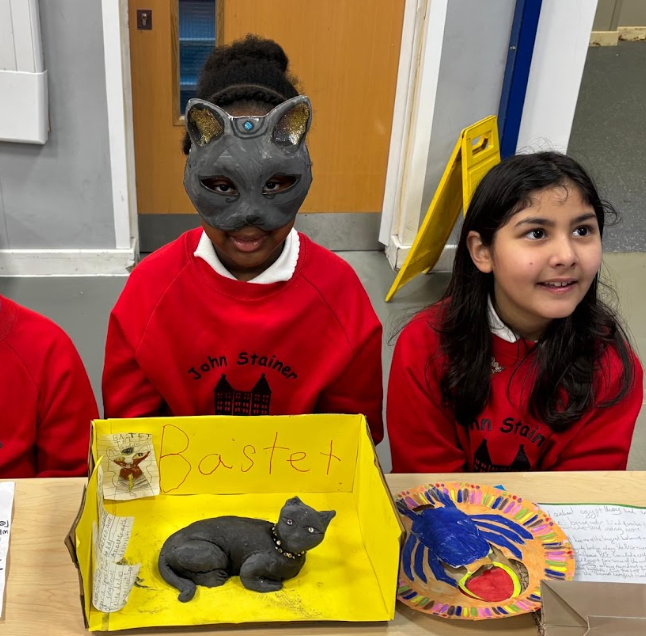
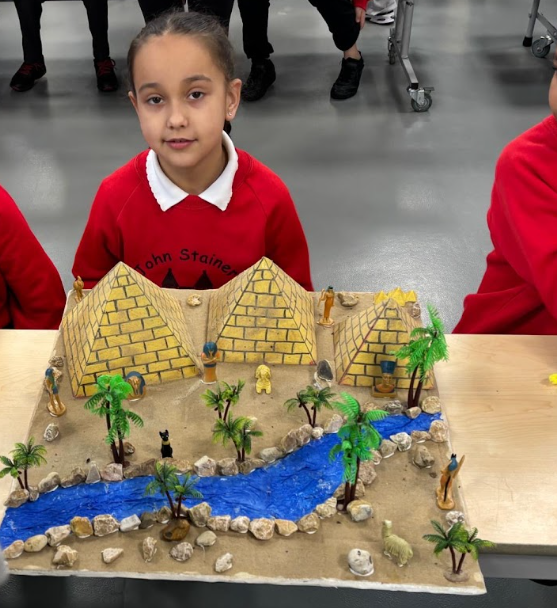
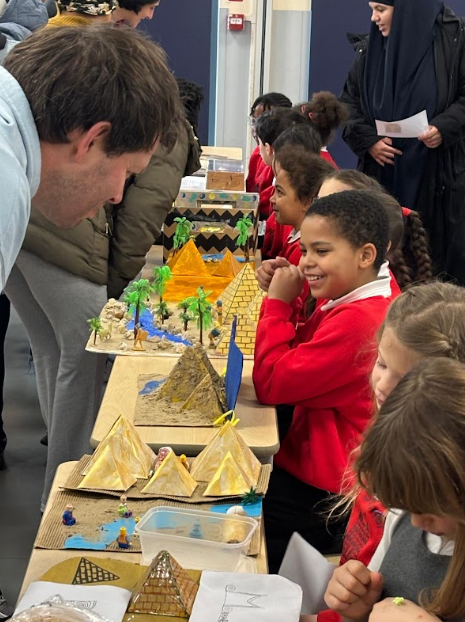
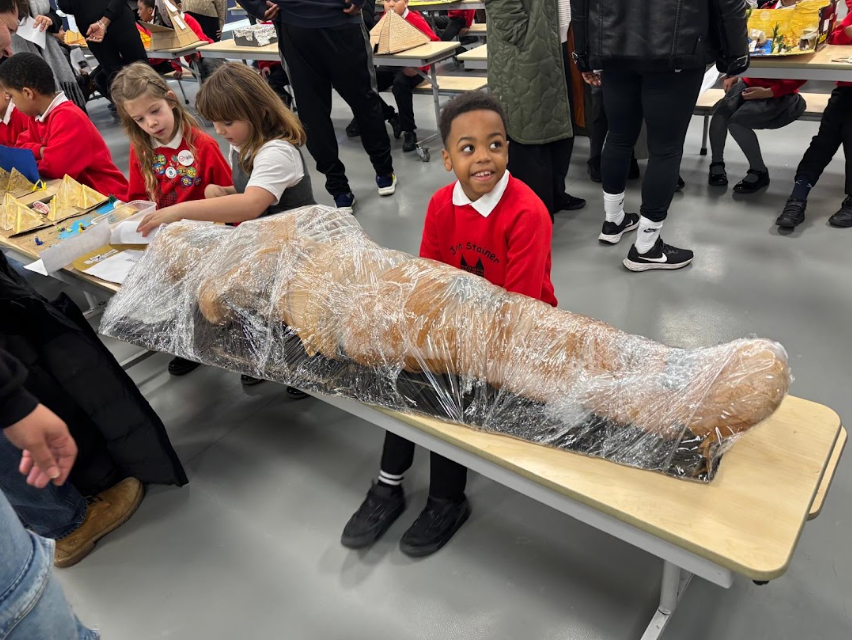
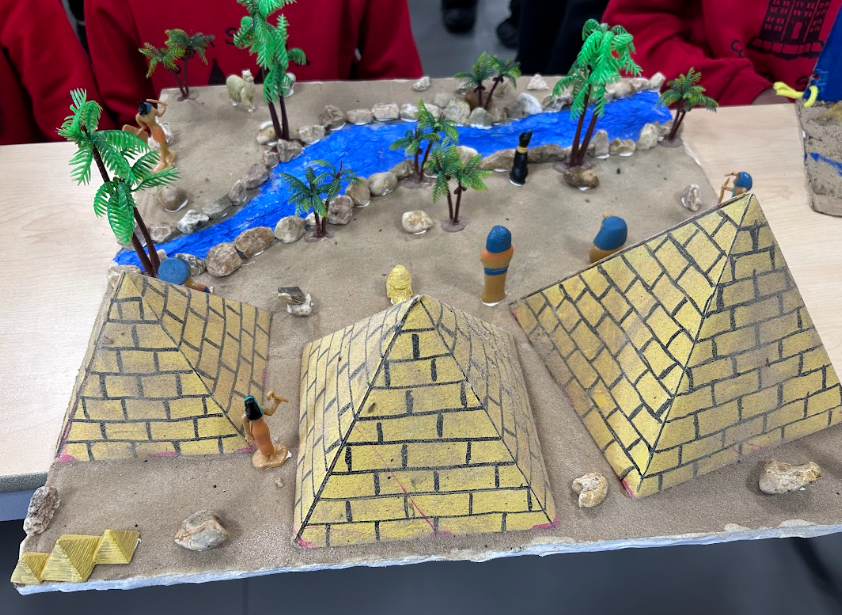
Class Exhibitions

Enrichment passports
Our Enrichment Passports encourage children to extend their learning beyond the classroom by exploring a wide range of experiences at home and in the community. The passport includes activities such as visiting local places of interest, reading different types of books, trying new hobbies, taking part in creative projects and exploring nature. These experiences help children to develop curiosity, independence and a broader understanding of the world around them while sharing meaningful learning experiences with their families.
This page was last updated in March 2026