English as an
Additional Language
|
New arrivals whose first language is not English |
Children who have lived in the UK for a long time and may appear to be fluent, but who also use another language at home. |
|
Children who were born in the UK but for whom their home language is not English |
Simultaneous bilinguals (those learning 2+ languages from birth) |
At John Stainer Community Primary School we recognise that many of our pupils speak more than one language. We view this as a strength that enriches our school community. Our aim is to ensure that pupils who are learning English feel welcomed, confident and fully included so that they can access the curriculum, develop strong communication skills and achieve their potential.
What we mean by EAL
English as an Additional Language refers to pupils who speak a language other than English at home. This may include:
- New arrivals whose first language is not English
- Children who have lived in the UK for a long time but continue to use another language at home
- Children born in the UK whose home language is not English
- Simultaneous bilinguals who have been learning two or more languages from birth
Celebrating languages and cultures
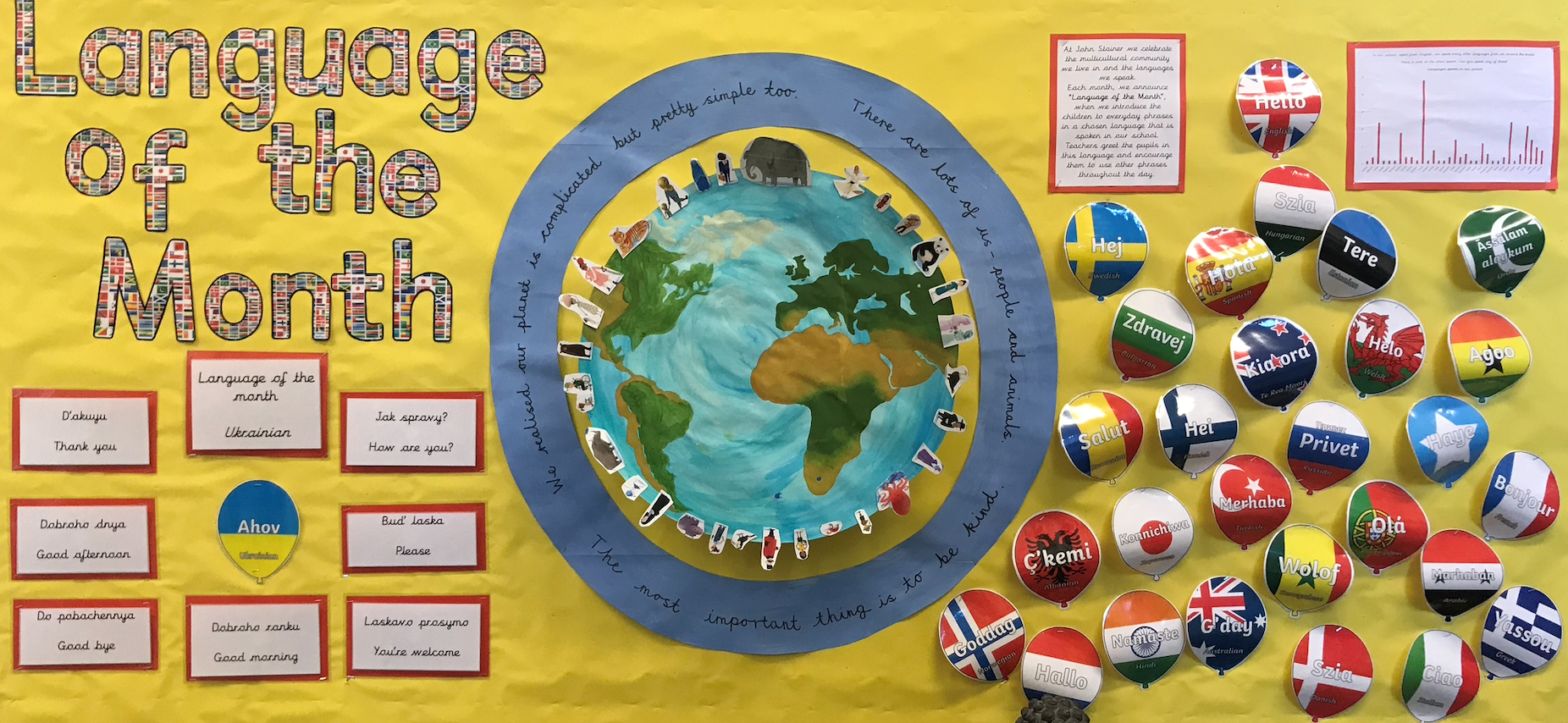
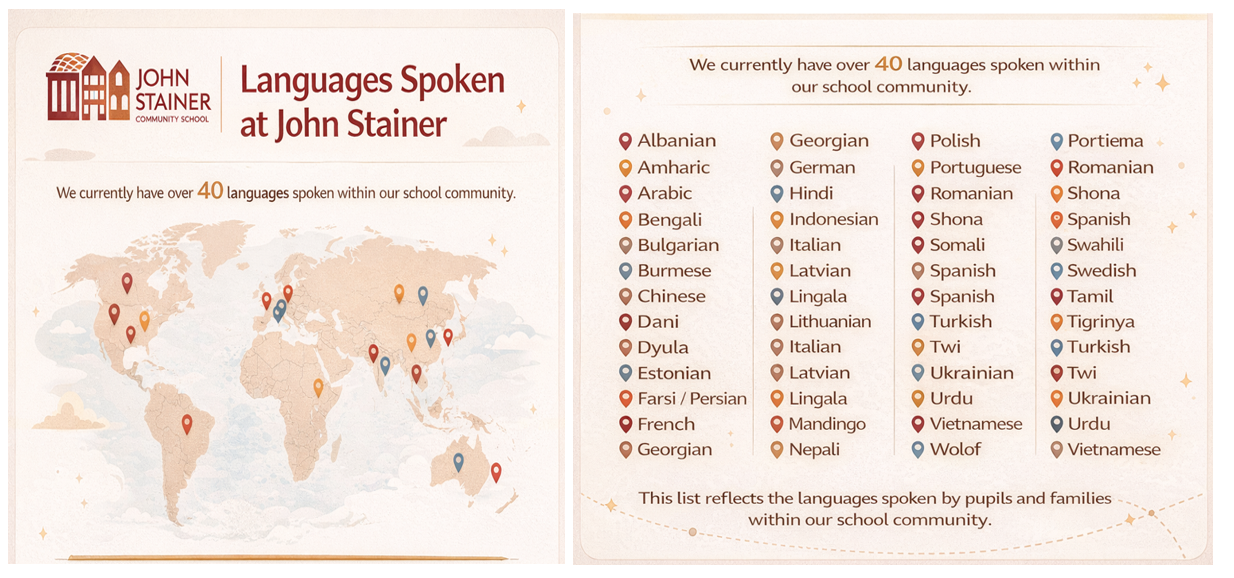 At John Stainer we celebrate the wide range of cultures, languages and religions represented by our pupils, their families and the world in which we live.
Each fortnight we introduce a Language of the Week. Children learn simple phrases from a language spoken within our school community and are encouraged to greet one another using this language throughout the two-week period.
Supporting new arrivals
We understand that learning a new language can feel challenging for both children and their families. When a pupil joins the school with English as an additional language, the Pupil Welfare Officer meets with the child and their parents or carers.
These meetings help us build positive relationships with families and gather important information about the child. During this process we create an EAL profile which includes:
- the child’s first language and language experience at home
- their educational background and previous schooling
- their interests and experiences
- any additional needs
This information helps staff assess and track language development, adapt teaching and provide the right support for each child. Support may include talk partners, playground buddies and adjustments to the classroom environment to support language learning.
This approach helps children settle quickly and make strong progress.
Tracking language development
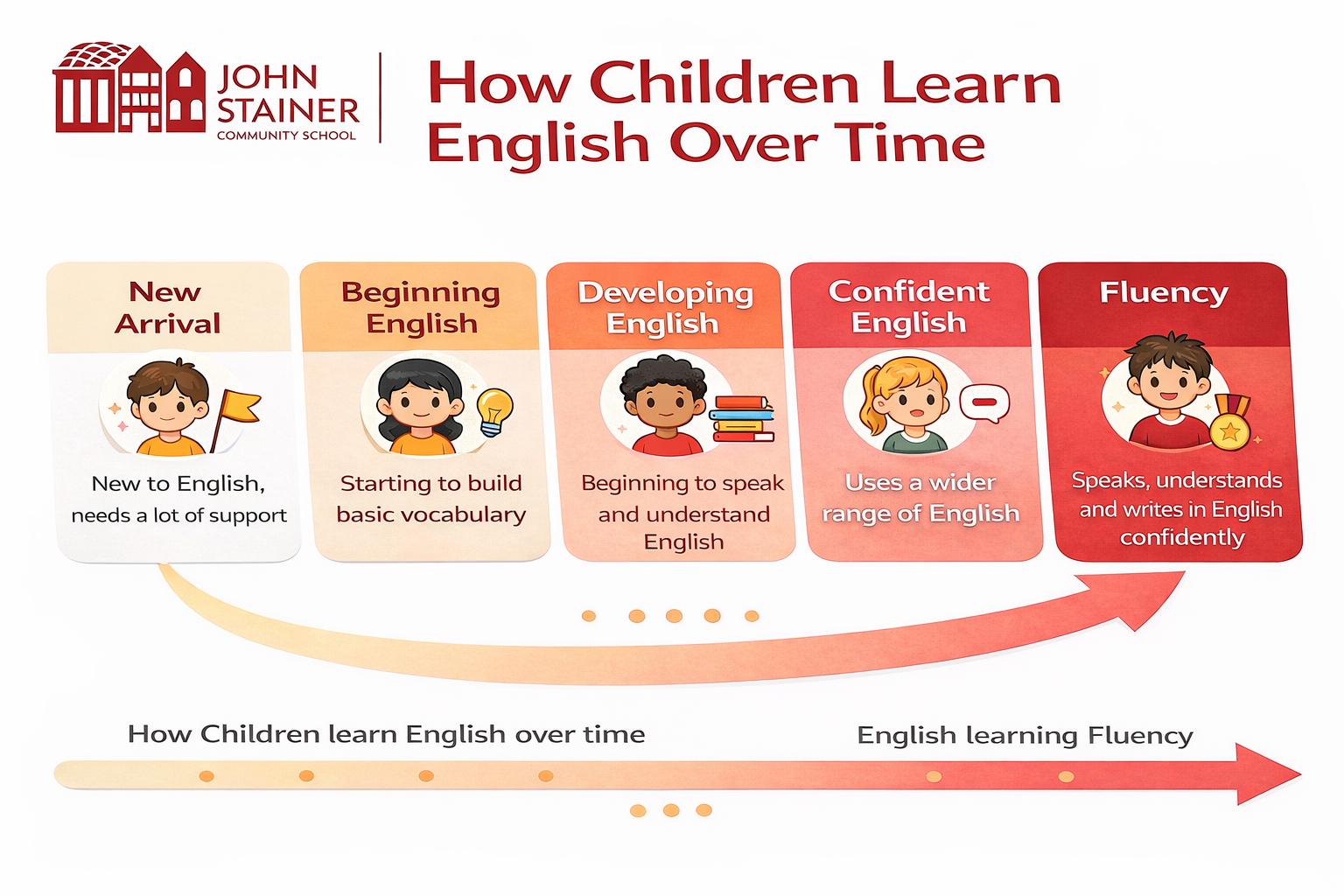
We use a language proficiency framework to identify pupils’ starting points in English and track their progress as they develop confidence and fluency.
Targeted support
Language acquisition involves more than simply being immersed in English. Some aspects of language benefit from focused teaching.
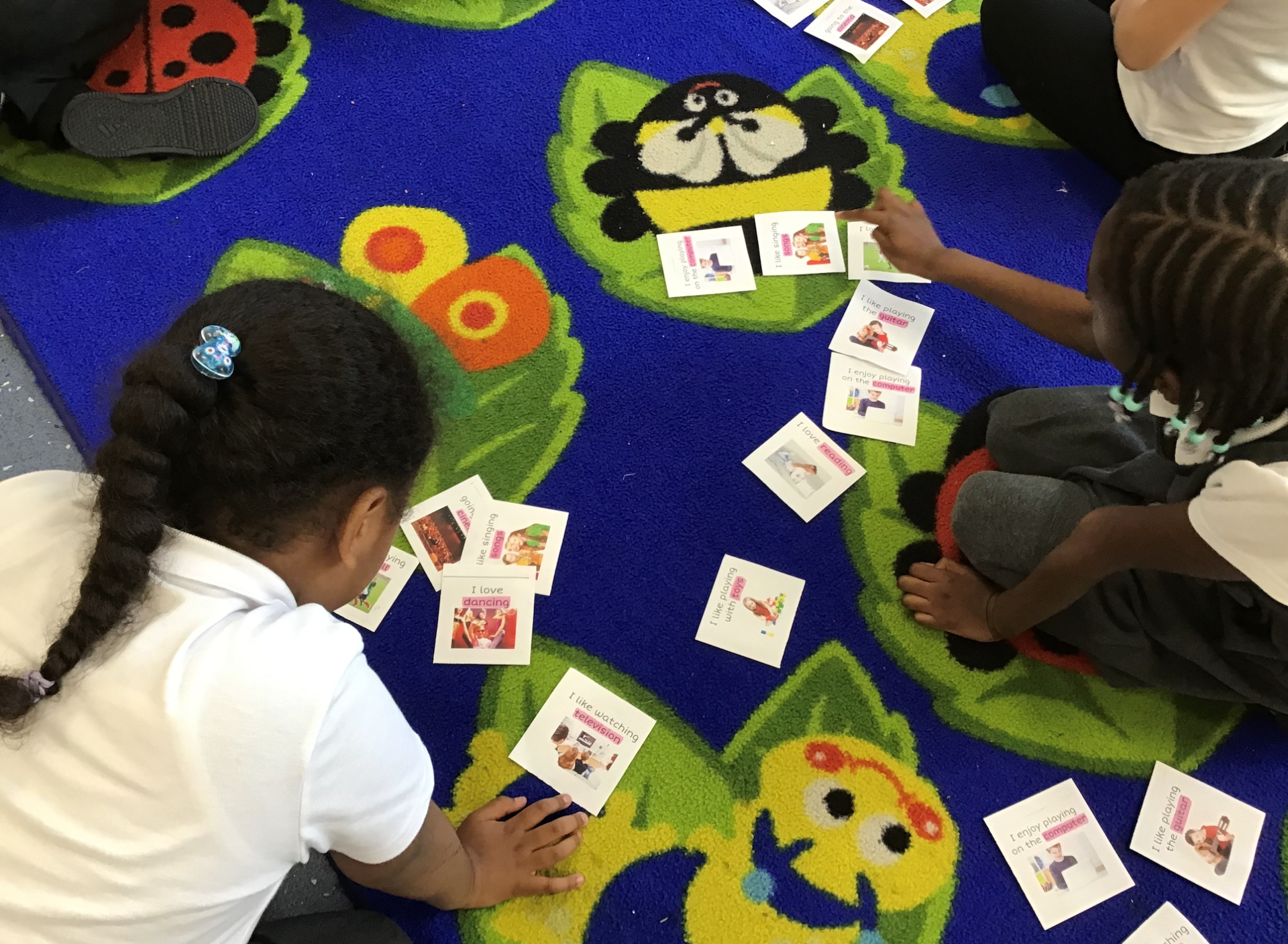
Our trained staff provide short, targeted language sessions where needed. These sessions may take place individually or in small groups and support the development of vocabulary, speaking and listening skills.
We also use Little Bridge alongside high quality teaching to support vocabulary development and language learning.
Supporting vocabulary and spelling
Children in the early stages of learning English are supported with key vocabulary lists linked to classroom learning. Learning to read and write these words helps pupils build confidence and communicate more effectively in English.
EAL club
We run weekly sessions of EAL club which is led by our trained members of staff. During this time, children have an opportunity to consolidate their learning and boost their confidence by using spoken language.
However, the word lists below are key vocabulary from our lesson sequences used with New Arrivals, or those at the early stages of learning English here at John Stainer.
This page was last updated in March 2026